
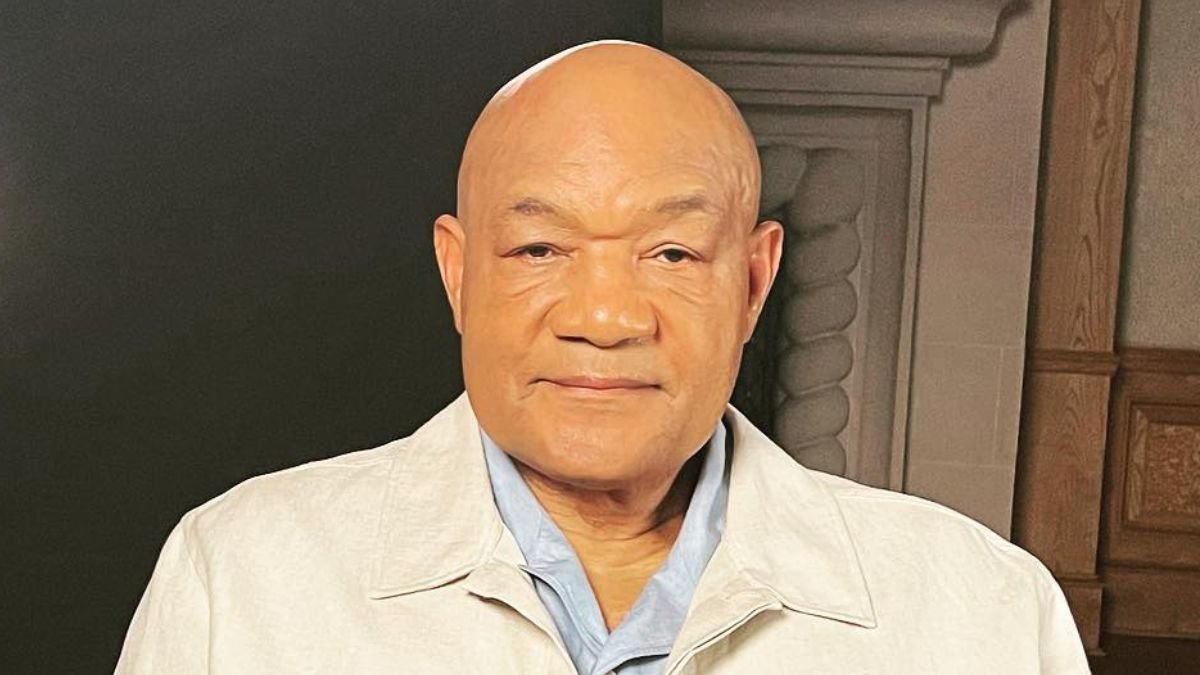
George Foreman was an American boxing icon and extraordinarily successful entrepreneur with an estimated net worth of $300 million at the time of his death.
While he earned millions during his early boxing career, Foreman’s vast fortune was built largely outside the ring, thanks to one of the most lucrative endorsement deals in history.
Between 1969 and 1977, Foreman earned roughly $5 million from boxing purses—equivalent to about $20 million today. Unfortunately, a combination of poor investments and lavish spending eroded that wealth.
By 1987, nearly a decade into retirement, Foreman was financially broke. That hardship pushed him into an improbable and historic boxing comeback in the late 1980s and 1990s.
Despite his success as a fighter, boxing alone did not make George Foreman rich.
The overwhelming majority of his fortune came from a single household product that transformed his public image and financial future—the George Foreman Grill.
Boxing Legacy And Career Overview
Born on January 10, 1949, in Marshall, Texas, George Foreman rose from humble beginnings to become one of the most feared heavyweights in boxing history.
He first captured global attention by winning gold at the 1968 Mexico City Olympics, a moment he later described as the proudest achievement of his life.
Turning professional in 1969, Foreman quickly developed a reputation as a devastating puncher.
His ascent culminated in 1973, when he demolished Joe Frazier to become the undisputed heavyweight champion.
His reign ended the following year with a loss to Muhammad Ali in the legendary “Rumble in the Jungle”—one of the most iconic bouts in sports history.
Foreman retired in 1977, became an ordained minister, and shocked the boxing world by returning to the ring at age 38.
In 1994, he achieved the impossible, knocking out Michael Moorer to reclaim the heavyweight title at 45 years old, making him the oldest heavyweight champion ever.
He retired permanently in 1997 with a remarkable record of 76 wins, 5 losses, and 68 knockouts, and was later inducted into both the World Boxing Hall of Fame and the International Boxing Hall of Fame.
The George Foreman Grill Phenomenon
The George Foreman Lean Mean Fat-Reducing Grilling Machine, launched in 1994, revolutionized home cooking and changed Foreman’s life forever.
Featuring a sloped design that drained excess fat, the grill appealed strongly to health-conscious consumers and quickly became a global sensation.
Originally invented by Michael Boehm, the product gained traction only after Foreman agreed to lend his name and personality to it.
His warm, approachable presence in infomercials contrasted sharply with his intimidating boxing persona and resonated with millions of viewers.
Sales exploded. By 1999, more than 20 million units had been sold, prompting Salton, Inc. to buy out Foreman’s rights for approximately $137.5 million in cash and stock.
At the peak of the product’s success, Foreman was earning as much as $8 million per month in royalties.
Over time, the grill sold more than 100 million units worldwide, and Foreman’s total earnings from the product exceeded $250 million, dwarfing his boxing income and securing his legacy as one of the most successful athlete-entrepreneurs ever.
Early Life And Personal Reinvention
George Edward Foreman grew up in Houston, Texas, alongside six siblings. Raised in a challenging environment, he left school at 15 and struggled during his teenage years.
Seeking a new path, he joined the Job Corps, earned his GED, and learned a trade before discovering boxing in California.
These formative experiences shaped Foreman’s discipline and resilience, qualities that later defined both his boxing comeback and business success.
Boxing Career Highlights
-
1968 Olympic Gold Medalist
-
Undisputed Heavyweight Champion (1973)
-
Oldest Heavyweight Champion in History (1994)
-
Career Record: 76–5 (68 KOs)
-
Hall of Fame Inductee (2003)
-
Ranked among the greatest heavyweights of all time
Car Collection Auction
In November 2023, Foreman auctioned off his extensive car collection through Hagerty Marketplace, offering more than 50 vehicles without reserve. The sale drew global interest and underscored his passion for automobiles.
Notable Auction Highlights:
-
2005 Ford GT – Sold for $330,000
-
1963 Corvette Split-Window Fuelie – ~$125,000
-
1987 Ferrari Testarossa – $143,000
-
1959 Chevrolet Impala Convertible – $153,000
-
1999 Prevost Luxury Touring Coach – $115,000
Personal Life
George Foreman was married five times and was the father of 12 children. In a famously unique tradition, he named all five of his sons George Edward Foreman, believing it created unity and shared identity. He strongly emphasized education and personal discipline within his family.
Foreman’s later years were marked by faith, philanthropy, and mentoring young athletes.
Real Estate Portfolio
Over the decades, Foreman amassed an impressive collection of properties, including:
-
A former training ranch in California
-
A 300-acre ranch in Marshall, Texas
-
A Malibu beachfront townhouse
-
A 29-acre Texas estate featuring a 12,000-square-foot mansion and a garage built to house over 50 cars
His most notable estate in Huffman, Texas, was listed for $9.5 million in late 2024.
FAQ
How many children did George Foreman have?
George Foreman had 12 children, five of whom are all named George Edward Foreman.
What was George Foreman’s most remarkable comeback?
At age 45, Foreman regained the heavyweight title by defeating Michael Moorer in 1994, becoming the oldest heavyweight champion in history.
Did George Foreman have other business ventures?
Yes, Foreman also invested in real estate and auctioned a large car collection, reflecting his interest in luxury vehicles and property.