
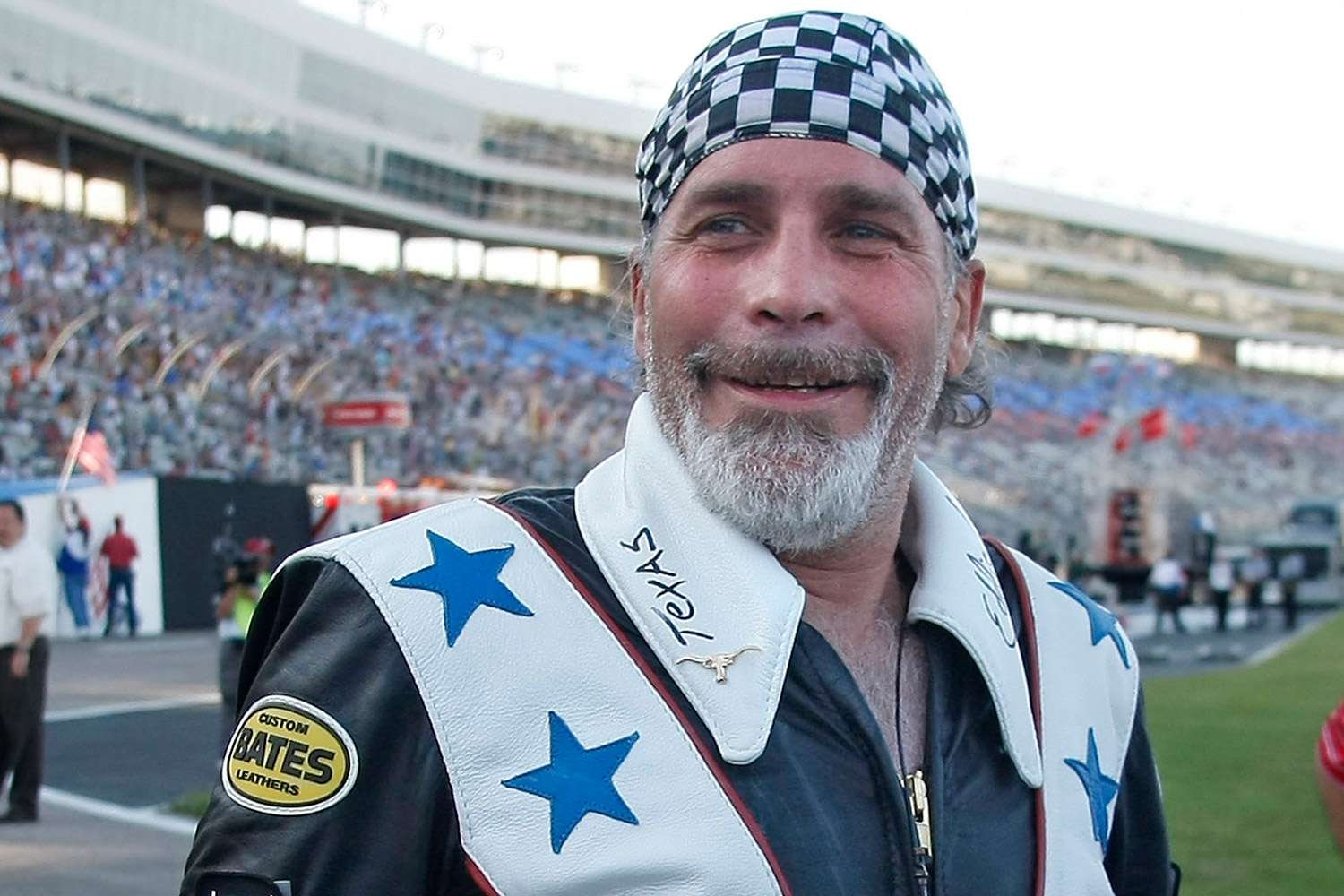
Evel Knievel was an iconic American daredevil motorcyclist, entertainer, and artist with an estimated net worth of $3 million at the time of his death in 2007.
Known worldwide for his fearless motorcycle jumps and spectacular crashes, Knievel became one of the most recognizable pop culture figures of the 1960s and 1970s.
Born Robert Craig Knievel in Butte, Montana, he rose from humble beginnings to global fame through a combination of extreme risk-taking, showmanship, and relentless self-promotion.
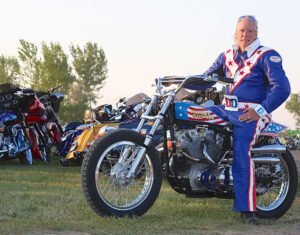
Clad in his signature red, white, and blue leather jumpsuit and cape, Knievel thrilled millions by attempting jumps over cars, buses, fountains, animals, and massive natural landmarks.
Though many of his stunts ended in violent crashes, his willingness to risk everything made him a legend.
Early Life And Career Beginnings
Evel Knievel was born on October 17, 1938, in Butte, Montana, to Ann Marie and Robert E. Knievel.
After his parents divorced in 1940, Evel and his younger brother Nic were raised by their paternal grandparents.
A restless and rebellious teenager, Knievel attended Butte High School but dropped out after his sophomore year.
He went on to work in the Anaconda Copper Mines as a diamond drill operator, but his thrill-seeking nature soon got him fired after performing a wheelie on heavy equipment and knocking out a major power line.
Adventure followed him everywhere—he competed in ski jumping, rodeos, and even joined the U.S. Army, where he served as a pole vaulter on the track team.
In the early 1960s, Knievel tried his hand at various careers, including running a hunting guide service and selling insurance. Despite moderate success, he craved something bigger—something spectacular.
First Stunt Performances And Rise To Fame
After quitting his insurance job due to stalled promotions, Knievel moved west and opened a Honda motorcycle dealership, which eventually failed due to slow sales.
While working at a motorcycle shop in Washington, he learned advanced riding tricks and became inspired by daredevil auto shows he had admired as a child.
In 1965, Evel launched his first stunt show, performing wheelies and jumping over rattlesnakes and mountain lions.
His early success led to sponsorships and touring opportunities. By 1966, Knievel was performing across the country, steadily increasing the scale and danger of his jumps.
His big break came in 1967, when he attempted a record-breaking jump over the fountains at Caesars Palace in Las Vegasa stunt that ended in a catastrophic crash but catapulted him to national fame.
Most Insane And Iconic Career Stunts
Evel Knievel became as famous for his crashes as his successes. Over his career, he suffered more than 433 bone fractures, earning a Guinness World Record. Some of his most legendary stunts include:
-
Caesars Palace Fountain Jump (1967): Crashed on landing, spent weeks hospitalized with crushed bones and internal injuries.
-
19-Car Jump at Ontario Motor Speedway (1971): Successfully cleared 19 cars side by side, setting a world record.
-
Snake River Canyon Rocket Jump (1974): Attempted to cross a quarter-mile canyon using a steam-powered rocket; the parachute deployed early, resulting in failure—but massive global viewership.
-
14 Greyhound Buses at Kings Island (1975): Successfully cleared all buses, setting another record.
-
Wembley Stadium Jump (1975): Crashed while jumping double-decker buses, breaking his pelvis.
-
Shark Tank Jump (1976): Leapt over a tank containing 13 sharks in Chicago.
These stunts made Knievel a household name and a television phenomenon.
Cultural Impact And Financial Success
At the height of his fame, Evel Knievel was more than a daredevil—he was a global brand. His image appeared on toys, lunchboxes, action figures, comic books, and clothing. He starred in films, inspired video games, and became a staple of American pop culture.
Despite earning millions through performances, endorsements, and merchandise, Knievel’s finances were frequently strained by medical bills, legal issues, and lavish spending, which ultimately limited his net worth compared to his fame.
Post-Retirement Years
Knievel officially retired from major stunt performances in 1980. In his later years, he focused on supporting the career of his son, Robbie Knievel, who followed in his footsteps as a professional motorcycle jumper.
During the 1980s and 1990s, Evel toured the country selling artwork, making guest appearances, and endorsing brands such as Harley-Davidson, Little Caesars, and Maxim Casino.
In the early 2000s, he licensed his life story for a rock opera and participated in charitable events.
Personal Life And Health Struggles
Evel Knievel married Linda Joan Bork in 1959, and they had four children: Kelly, Robbie, Tracey, and Alicia.
The couple divorced in 1997 after decades together. Knievel later married Krystal Kennedy, though the marriage was short-lived.
Years of crashes took a heavy toll on his health. In the late 1990s, Knievel underwent a life-saving liver transplant after battling Hepatitis C.
He later suffered multiple strokes and was diagnosed with a terminal lung condition that required continuous oxygen support.
Evel Knievel passed away on November 30, 2007, at the age of 69, in Clearwater, Florida.
Legacy Of Evel Knievel
Evel Knievel remains widely regarded as the greatest motorcycle daredevil in history. His courage, charisma, and willingness to risk everything transformed stunt riding into mainstream entertainment.
Decades after his final jump, his influence continues to shape extreme sports and popular culture.
Frequently Asked Questions
What was Evel Knievel’s most famous stunt?
His most famous stunt was the Snake River Canyon rocket jump in 1974, watched by millions worldwide.
Why did Evel Knievel wear a red, white, and blue jumpsuit?
The outfit symbolized American patriotism and became his signature brand identity.
Did Evel Knievel have children?
Yes, he had four children, including fellow daredevil Robbie Knievel.