

Arsenal fans are famously called “Gooners,” a nickname that evolved from the club’s own long-standing moniker, “The Gunners.”
Nicknames are an inseparable part of football culture. Every team, no matter where in the world, seems to have one.
But where do these monikers come from? The origins of football club nicknames often trace back to a wide range of influences — from the local industries that shaped their communities to the color of their kits.
For instance, Stoke City is famously known as The Potters, a nod to the city’s historic pottery industry. Similarly, Chelsea and Liverpool owe their nicknames — The Blues and The Reds — to the dominant colors of their playing kits.
The beauty of football nicknames lies in their individuality and heritage. While some, like The Blues, are fairly common, others have unique stories tied to their history.
A great example is Everton’s nickname, The Toffees, which originated from two nearby sweet shops close to their first ground.
Where Does The Nickname “The Gunners” Come From?
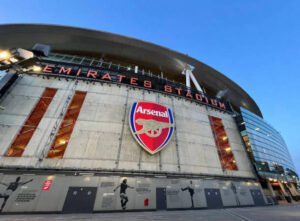
Have you ever noticed the cannon symbol on Arsenal’s iconic crest? The club’s famous nickname, The Gunners, has its roots in its very foundation.
Arsenal was established by workers from the Royal Arsenal munitions factory in Woolwich, southeast London — a place historically associated with the production of artillery and weapons.
Originally named Dial Square, after the sundial mounted above the factory’s entrance, the team later became Woolwich Arsenal before finally adopting the name Arsenal FC.
The cannon, representing their connection to armament manufacturing, became the defining emblem of the club’s identity.
Even after relocating to Highbury in North London, Arsenal retained the cannon motif and the nickname The Gunners.
Over the decades, the design of the crest has evolved, yet the cannon has always remained the centerpiece.
Interestingly, much of the original Royal Arsenal site still exists today, redeveloped into residential properties that house thousands of residents.
The area is now one of the largest collections of Grade I and Grade II listed buildings converted into homes in the UK.
Where Does The Nickname “Gooners” Come From?
While the team is universally recognized as The Gunners, Arsenal fans themselves are affectionately known as Gooners.
The true origin of this term remains somewhat debated, but several theories exist.
One explanation links the nickname to the hooligan culture of the 1970s. During that period, one of Arsenal’s hooligan groups was called The Goon Squad.
The term “Gooners” is believed to have evolved by blending the club’s nickname with that group’s identity.
Another theory suggests that rival fans once mocked Arsenal supporters as “goons” for their rowdy behavior.
Instead of rejecting the term, the fans embraced it, turning an insult into a badge of pride.
A simpler explanation might be phonetic — Gooners could simply be a playful variation in pronunciation of Gunners, much like how Newcastle United fans call themselves the Toon Army, based on their local accent.
Has Arsenal Had Any Previous Nicknames?
Arsenal has largely stuck with The Gunners and The Gooners throughout its history, but rival fans have occasionally coined less flattering labels.
During George Graham’s managerial reign in the late 1980s and early 1990s, Arsenal earned the sarcastic nickname “Boring, Boring Arsenal” due to their defensive and pragmatic style of play — though it was undeniably effective.
Another jibe, “Same Old Arsenal, Always Cheating”, has its roots in the club’s controversial promotion to the First Division in 1919.
Under the influence of club chairman Henry Norris, sixth-placed Arsenal were elected into the top tier — a decision that angered many rival clubs, particularly local rivals Tottenham Hotspur. The phrase has since endured as a taunt from opposing supporters.
Do Any Other Teams Share The Nickname “The Gunners”?

Within English football, the Gunners remain uniquely associated with Arsenal. However, several European clubs share similar nicknames that reflect their own historical ties to armament production.
Spanish side SD Eibar, currently competing in Spain’s Segunda División, are known as Los Armeros, which translates to The Gunsmiths — a direct reference to the city’s long-standing weapons manufacturing industry.
In Eastern Europe, Russian club FC Arsenal Tula is called Pushkari, meaning Gunners, while Ukrainian side Arsenal Kyiv are known as The Cannoneers.
Frequently Asked Questions
Why Is Arsenal Called The Gunners?
The nickname comes from the club’s roots in the Royal Arsenal munitions factory, which produced artillery. The cannon symbol and Gunners’ nickname naturally evolved from this connection.
Why Are Arsenal Fans Called Gooners?
Gooners is a fan-created version of Gunners, believed to have originated from the 1970s Goon Squad or from a playful pronunciation shift among supporters.
When Did Arsenal Start Using The Cannon Logo?
The cannon first appeared in the early 1880s and has remained a constant element of the badge ever since, symbolizing the club’s historic roots.
Are There Other Football Clubs Known As The Gunners?
Yes — SD Eibar (Spain), Arsenal Tula (Russia), and Arsenal Kyiv (Ukraine) all have nicknames linked to weapon manufacturing, similar to Arsenal’s.
What Does The Word ‘Arsenal’ Actually Mean?
An arsenal refers to a place where weapons and military equipment are stored or manufactured, directly referencing the Royal Arsenal where the club began.
Did Arsenal Have Any Other Nicknames In The past?
Not officially, though rival fans have used chants like “Boring Arsenal” or “Always cheating Arsenal” as playful (or critical) digs over the years.