

“Ankara Messi” is a misheard phrase that has become iconic among Lionel Messi fans.
Lionel Messi — the name alone evokes thoughts of dribbling mastery, visionary playmaking, and goal-scoring brilliance.
He is a footballer who transcends generations, a player whose artistry defines the modern era of the sport.
Yet, among his countless accolades, there exists a peculiar yet beloved phrase that has echoed through football circles worldwide — “Ankara Messi.”
While it may sound like Messi developed a new skill or connection to Turkey’s capital, “Ankara Messi” is, in truth, the result of a simple mispronunciation that evolved into one of football’s most iconic moments.
What Does “Ankara Messi” Really Mean?
The term originates from one of Messi’s earliest masterpieces — the 2006–2007 Copa del Rey semi-final first leg between Barcelona and Getafe.
Then, a 19-year-old prodigy, Messi produced a goal that mirrored Diego Maradona’s legendary solo strike against England in 1986.
During that unforgettable play, Messi picked up the ball near midfield and danced past several Getafe defenders, gliding effortlessly toward goal before rounding the keeper and finishing with elegance.
The stadium erupted — and so did commentator Joaquim Maria Puyal.
As the Spanish-Catalan journalist narrated Messi’s mesmerizing run, he repeatedly exclaimed:
Encara Messi! Encara Messi!”
In Catalan, “Encara” translates to “still” or “face up,” implying that Messi continued to confront defenders head-on while maintaining control.
However, in the passion of the moment, “Encara” was misheard by fans around the world as “Ankara.” The word stuck — transforming from an innocent slip of the tongue into a viral football expression.
Who Coined The Phrase “Ankara Messi”?
The man behind the phrase, Joaquim Maria Puyal, is one of Spain’s most respected sports commentators.
Known for his deep passion and poetic delivery, Puyal’s emotional outburst during Messi’s goal immortalized both the play and the phrase.
Interestingly, Puyal’s credentials extend far beyond the microphone. He holds a Ph.D. in linguistics and degrees in Romance philology and information sciences — proof that even the most eloquent voices can produce the most endearing accidents.
From A Slip Of The Tongue To A Global Viral Moment
Following the match, the term “Ankara Messi” spread like wildfire. Fans replayed the clip endlessly, uploading it to YouTube and sharing it across social media platforms.
Memes, edits, and remixes soon emerged — each one celebrating Messi’s supernatural ability to glide past defenders as if guided by destiny.
The magic of “Ankara Messi” lies in its spontaneity. It captures the raw, unscripted emotion of football — the way a commentator’s passion can crystallize a moment into cultural history.
What began as a verbal misstep evolved into a term synonymous with Messi’s unrivaled dribbling genius.
Beyond Pronunciation: The Symbolism Of “Ankara Messi”
Over time, “Ankara Messi” became more than just a humorous phrase — it became a symbol of football excellence.
Fans now chant or post “Ankara Messi!” whenever the Argentine magician embarks on a dazzling solo run or scores a breathtaking goal.
The phrase transcends language and borders, embodying the universal joy of the game. It reminds us how football unites fans across cultures — whether you’re in Barcelona, Buenos Aires, or Ankara itself.
In linguistic terms, “encarar” (from which the phrase originates) means “to face,” an apt description of Messi’s fearless approach to defenders.
Whether surrounded by five players or sprinting down the wing, Messi embodies confrontation through creativity — the essence of “Ankara Messi.”
Ankara Messi In Popular Culture
The influence of “Ankara Messi” extends well beyond football commentary.
-
Music: In 2021, a Turkish artist named Alkara released a track titled “Ankara Messi”, fusing hip-hop and football fandom to celebrate the viral phrase.
-
Social media: On Twitter, TikTok, and Instagram, the term is widely used to describe any moment of solo brilliance — even outside of Messi’s performances. It has evolved into a shorthand for unstoppable talent and confidence under pressure.
Who Is Lionel Messi?
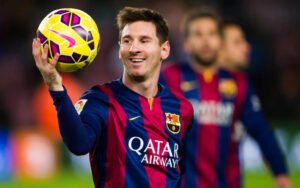
Born on June 24, 1987, in Rosario, Argentina, Lionel Andrés Messi is widely regarded as the greatest footballer of all time.
Known for his unparalleled technique, vision, and composure, Messi spent over two decades at FC Barcelona, where he became the club’s all-time top scorer and won numerous Ballon d’Or awards.
After financial complications forced Barcelona to part ways with him in 2021, Messi joined Paris Saint-Germain (PSG) before later moving to Inter Miami in Major League Soccer.
His records — from most goals in a calendar year to his incredible assists and trophies — are testaments to his genius.
The “Ankara Messi” goal remains one of the purest expressions of that genius, embodying not only skill but also the spirit of football artistry.
One debate that continues to divide football fans around the world is the question: Is Messi better than Ronaldo? While Cristiano Ronaldo is admired for his physical dominance, goal-scoring consistency, and longevity, Messi is often praised for his natural talent, creativity, and playmaking ability.
This rivalry has defined an entire generation of football, with both players setting extraordinary standards and building legacies that may never be matched.
Why “Ankara Messi” Still Matters Today
Nearly two decades later, “Ankara Messi” continues to resonate. It’s more than a nostalgic memory; it’s a celebration of passion, spontaneity, and human brilliance.
Each time fans recall it, they are reminded that the beauty of football lies not just in perfection, but in the moments of unfiltered emotion that define it.
Iconic Videos of Fans and Commentators Yelling ‘Ankara Messi’
Below is one of the most memorable clips where the chant truly comes to life.
Frequently asked questions
Who Said “Ankara Messi”?
The phrase was famously shouted by Spanish-Catalan commentator Joaquim Maria Puyal during Messi’s stunning solo goal for Barcelona against Getafe in the 2006–07 Copa del Rey semi-final.
His passionate repetition of “Encara Messi! Encara Messi!” became one of football’s most memorable commentary moments.
Which Match Did “Ankara Messi” Happen In?
The legendary “Ankara Messi” moment took place during the Copa del Rey semi-final first leg between Barcelona and Getafe on April 18, 2007.
Messi, just 19 at the time, dribbled past five defenders and the goalkeeper before scoring a goal that drew instant comparisons to Diego Maradona’s 1986 World Cup masterpiece.
Why Is It Called “Ankara Messi”?
It’s called “Ankara Messi” because fans around the world misheard the Catalan word “Encara” (which means “still” or “keep facing”) as “Ankara,” the capital city of Turkey.
Despite being a simple misunderstanding, the phrase gained massive popularity and became synonymous with Messi’s magical solo goals.
Is “Ankara Messi” The Same As “Encara Messi”?
Yes, they both refer to the same commentary moment. The correct phrase is “Encara Messi,” but the misheard version, “Ankara Messi,” spread globally because it sounded catchy and humorous.
Over time, fans embraced the incorrect version as a fun football meme and tribute to Messi’s brilliance.
When Did The “Ankara Messi” Meme Go Viral?
The “Ankara Messi” meme went viral around 2015–2016, almost a decade after the original match.
Social media platforms like YouTube, Twitter, and TikTok revived the clip, using the phrase to highlight Messi’s solo goals or incredible dribbling skills. Since then, it’s become a staple in football fan culture.
Why Do Fans Still Use “Ankara Messi”?
Fans use “Ankara Messi” as a playful way to celebrate moments of pure skill and creativity — especially solo runs that defy logic.
It represents Messi’s ability to glide past defenders effortlessly and has become shorthand for “football magic.” The phrase is now part of football’s global internet language.
Is “Ankara Messi” Connected To Turkey?
No, it has no connection to Turkey or its capital, Ankara. The phrase only sounds like “Ankara,” but it actually comes from the Catalan word “Encara.”
Still, Turkish fans have embraced the meme, and some even humorously claim Messi has “Ankara roots” — proving how far the term has traveled culturally.
What Goal Is Known As The “Ankara Messi” Goal?
The “Ankara Messi” goal refers to Messi’s solo strike against Getafe in 2007, where he picked up the ball near the halfway line, dribbled past multiple defenders, rounded the goalkeeper, and scored.
It’s considered one of the greatest goals in football history and a moment that defined his early career.
What Makes “Ankara Messi” So Iconic?
Its brilliance lies in three things — Messi’s extraordinary skill, the commentator’s raw emotion, and the viral mispronunciation that turned into a global football catchphrase.
It’s a perfect example of how sports moments become timeless cultural phenomena — not just for what happens on the pitch, but how they’re experienced and remembered.
Is “Ankara Messi” Used For Other Players?
Yes, fans sometimes use “Ankara [Player Name]” for other footballers who produce Messi-like moments — dazzling runs, solo goals, or breathtaking dribbles.
It’s a way of paying homage to Messi’s legacy while acknowledging similar moments of football magic from others.
Has Lionel Messi Ever Reacted To “Ankara Messi”?
As of now, Lionel Messi has never publicly commented on the “Ankara Messi” phrase or its viral fame.
However, the clip remains one of the most replayed moments of his career, and fans worldwide continue to associate it with his unmatched genius and artistry.